Thursday, 10 November 2011

208 Theme 2 Nature - Adam Burton Professional Photographer


Assignment 208 Principles of location Photography Theme 2 Nature 

Research and influences - Adam Burton Professional Photographer

Adam Burton is a leading landscape photographer and the author of four books. He now concentrates on South West England but has previously taken photographs on five continents. He runs workshops and one to one tuition days. He uses a full frame digital SLR camera with just 3 high quality zoom lenses that give him focal lengths from 16 to 200 mm combined with Neutral Density and Polarising filters. He became a full time professional in 2008 and has since had images published on the covers of more than 100 magazines as well as books and calenders.

Close examination of the first 5 images below and a number of the others combined with the information above taken from Adam Burton's web site about the equipment he uses give the answer to how he produces these images. They are all have perfect exposure over the entire frame with the sky darkened probably by the use of a graduated neutral density filter and strong saturated colours probably helped by the use of a polarising filter. The eye is led into and through the image very well by the positioning of the natural features and focal point in the frame. The horizon and the main points of interest are placed on the thirds of the frame.


The image below has additional interest added with the branch of the tree over the river framing the image and the water leading the eye from the bottom right of the frame to the top left which is the brightest point of the image. A neutral density filter may have been used to reduce the light and hence increase the exposure required to give the river this white blurred appearance. The strong colours are beautiful and well saturated with a very good tonal range.


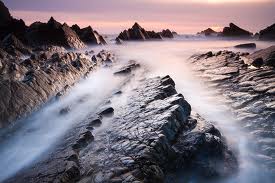
The 3 waterscapes below are beautiful studies of light and composition. The sky and reflections on the first and third images are spectacular with the eye led to a single vanishing point. I do not think that these images have been enhanced by the use of graduated or polarising filters. However on the second image below a neutral density filter over the complete frame may well have been used to reduce the light and hence increase the exposure time required to turn the sea into a white mist.  


The image above and the 3 below are all about mood colour and a minimalist approach to the composition. The beautiful colours are produced by the time of day with the sky and reflections taking on the blue or pink colours of the light. The two images below that may well have been taken a short time apart and show how the light changes the total look of an image. All of these images lead the eye into the frame by the placement of the rocks and water within the frame.


The following 4 images again show a perfect control of exposure probably with the aid of a graduated neutral density filter. The first image has a small white cottage on or about the bottom left third of the frame to give a focal point, after which the eye is led through to the horizon. The colours, textures and tonal range are very good on all of these images.


208 Theme 2 Nature - Ed Collacott Professional Photographer

Assignment 208 Principles of Location Photography Theme 2 Nature 

Research and influences - Ed Collacott Professional Photographer

Ed Collacott has been a professional landscape photographer for 25 years and has published a book called Landscape Britain. He also sells Canvas Prints, Greetings Cards and Calenders. 

This first image below has a very good balance, tonal range and exposure between the blue sky and the beach. The image is helped by the small amount of blue reflection of the sky in the rock pool. It is a good composition with the rocks giving some texture and foreground interest and the horizon just above the centre line so the frame is not cut in half. 

The two images below are dramatic sky scenes with very good exposure, colour, tonal range and texture in the clouds. The silhouetted trees at the base of the frame give scale to the images and the bright area above the horizon draws the eye into the frame with a single point of perspective.


This image is very difficult to get right, shooting into the setting sun and keeping the sea and rocks visible in the foreground needs just the right exposure. The tonal range and subtle colours produce a calm image. The eye is drawn from the sea spray on the rocks into the sun with a single point of perspective.

Another dramatic big sky with a minimalist silhouette horizon. There are beautiful colours, tones and textures in the sky. The brighter part of the clouds in the top left of the frame balances the brighter section in the bottom right to give a well composed image.

A well composed image with strong colour and very good exposure between the highlight and shadow of the sand dune and the sky. The bushes placed in the lower thirds on the frame add scale and texture.

A beautiful composition with basically two colours yellow and green but with many tones and textures. The square format is very complimentary to the subject and the eye is drawn down the two lines of trees to the single point of perspective vanishing point at the end of the avenue.

This image is all about the colours, textures, tonal range, beautiful reflections and the contrast between the tranquil lake and the dramatic mountains. Being able to see the rocks in the lake gives some foreground interest and then the eye is drawn to the focal point of the white topped mountains in the distance.
There is a beautiful warm light in the image and the eye is drawn from the beach in the bottom right past the rough textures of the darker cliffs to the rock stacks off the coast. The fact that the top of the image is burnt out by the setting sun helps this image and adds to the haze in the background. 

The warm colours of the sun on the clouds complement the warm tones of the ground but this is helped by the cool blue of some parts of the clouds. The colour range and texture of the hills a shown very well with good colour saturation.

This image has good foreground details and tonal range between the rocks and the sea that has been smoothed with a long exposure time. The silhouette of the land on the horizon gives a good balance to the image.


208 Theme 2 Nature - Charlie Waite Professional Photographer

Assignment 208 Principles of Location Photography Theme 2 Nature

Research and influences - Charlie Waite Professional Photographer

Charlie Waite lives in Dorset and is one of the leading Landscape photographers in the world. He has produced over 30 books and Amateur Photographer magazine featured him as an icon of modern photography. He also runs a company called Light and Land which is a photographic tour company. 

First some general comments about the images by Charlie Waite below. There are a number of common elements to these images, the square format, many have saturated strong colours, very good tonal range, well controlled exposures, many have lines that lead the eye into the frame and strong compositions. They all have a very good quality of light, some possibly because they may well have been taken on the continent. The square format could be produced by always cropping the images but more likely is the use of a medium format camera with a square format of possibly 6 x 6cm. 

The first image below has a large tonal range between the very dark sky at the top of the frame and the bright blue/green sea at the bottom. However it works and the sky adds drama as there is no single focal point just the horizon (which is just off centre) to draw the eye into the frame.  

This image is a beautiful composition with the dark blue sky and the different textures of the sky, fields and trees. The image is divided into thirds by the dark blue sky at the top, the lighter sky with clouds in the middle and the ground and trees at the bottom for a perfect composition.

The lines of the vines draw the eye into the frame very well and towards the bright point in the sky just above the horizon. Again there are three sections to the frame the foreground vines, the middleground trees and fields and the background sky and clouds. There are also a good range of colours and textures from the bottom to the top of the picture.

The very strong saturated colours of the lavender fields and the dark blue sky give a very dramatic image. The horizon divides the image across the middle which is unusual but works as the centre of the frame is dominated by the building, the trees and the dark blue hills. The eye is drawn down the lines of lavender towards the building and the trees.

The monochrome image below is given scale by the cows in the water. There is little interest in the plain dark sky but there is enough interest in the lower third of the frame to make it a very good and unusual study.

This is a simple but effective image with the boat on the lower left third of the frame giving the single point of perspective. There is a good range of textures from the rough pebbles on the beach to the smooth water and sky and the colours are very subtle.

This is a very strong and dramatic image because of the viewpoint with the eye being led down the rows of lavender to the single tree on the centre horizon. This gives a single point of perspective and single vanishing point. The textures and minimalist colours of blue and purple add to the beauty of the image.

A classic poppy field but very well taken with the one tree as a single focal point of perspective on the top left third of the image. The image is also lifted by the clouds over the dark hills or mountains in the background and strong saturated colours.

The image below is in some respects a classic seascape but a little unconventional because the focal point of interest, the island is in the middle of the frame not on one of the thirds and the horizon is also on the middle of the frame. However the rocks and sky give good textures and colours. The photographer decided to keep everything symmetrical and has produced a good image.

The next two images are of tree lined avenues but at different times of year. The first image is of autumn and conveys this with the warm hues of gold, brown and red. Lines of trees are always a good subject as they draw the eye into the centre of the frame with a single focal point of perspective. The exposure is very good on both images as the first image has not become too dark in the background and the second image has retained some detail in the much brighter background.


208 Theme 2 Nature - Wayne Brittle Professional Photographer

Assignment 208 Principles of Location Photography Theme 2 Nature 

Research and influences - Wayne Brittle Professional Photographer

Wayne is a local photographer, lives close to Burton and has 35 years experience. His main interest is landscape photography and he is a competent user of Photoshop on which he runs workshops. However he thinks it is important to get it right at the picture taking stage. He has written many articles for photographic magazines and also gives slide shows and talks to photographic clubs. Wayne was commended in the National 'Landscape of the Year Awards 2010'. 


The first image is a good strong beach scene with the eye being drawn into the frame to the dark standing rock on the centre third then on to the brightest part of the image just above the horizon. The colours are good and there is a little gold in the sky which complements the gold colour of the sand. The dark sky may have been helped with a graduated filter at the time of taking or in Photoshop afterwards.

The next two images are very similar in composition but are very different scenes and have different colour temperatures, the first with warm browns and reds the second with cool white and blue. For both there are beautiful colours in the sky and a wide range on tones and textures across the frame. The silhouetted tree and the setting sun (the single perspective point) have been well placed for a strong composition. The eye is drawn from the brightest part of the foreground across the frame to the tree and the sun and up into the clouds.


The next two images are simple but effective portrait format shots. This style can be good for sales to magazines as they are in the same format. However it is not easy with these wide angle lens images to keep all of the image in focus from the close foreground to the distant background and a small lens aperture is required. There is a good range of colours, tones and textures in both images and in both the eye is drawn up from the foreground detail to the lighter part of the frame to a single central point of perspective.


A beautiful image well captured with very good exposure to control the highlights and the silhouetted trees. The misty conditions have been used to reveal the sun's rays which draw the eye to the single bright focal point of the sun.

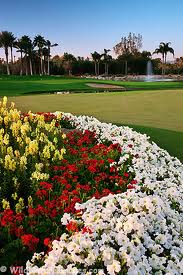
Another portrait format landscape image probably for promotional literature for a golf course and hence the format. Again a very small lens aperture would have been used to keep all of the image in focus. The image shows well the immaculate course and was taken in very good weather which is also important to show things at their best. The image is pin sharp with an excellent range of colours, tones and textures.

A classic waterscape with a full range of colours, tones and textures. The reflections of the mountains are well placed to fill the lake and the horizon is just off the centre line to help the composition.

A well composed image, the eye is led between the trees down the pathway and up to the brightest part of the frame at the top centre of the frame which is the focal point. There are a very good range of textures and subtle shades of brown, yellow and green with excellent exposure and range of tones.

The building has been placed on the upper right third of the frame for a strong composition. The glass clear water with reflections of the hills and sky help with a tranquil theme with a range of muted colours. The eye is led into the picture across the lake past the building and into the brightest part of the frame.


208 Theme 2 Nature - Tim Parkin Professional Photographer

Assignment 208 Principles of Location Photography Theme 2 Nature

Research and influences - Tim Parkin Professional Photographer

Tim Parkin is based in Yorkshire and his web site shows work he has produced from Glencoe, Northumberland, the Peak District, the Lake District as well as Yorkshire. After a trip to the Hebrides with two other Landscape Photographers (David Ward and Richard Childs) Tim has converted from a digital SLR to a large format camera. One of his recent pictures has been exhibited at the National Theatre as part of the Landscape Photographer of the Year awards. 


A strong beach scene with the eye being drawn into the frame to the dark rock on the upper right third then across to the brightest part of the image on the horizon. The colours are good with the gold sky reflected in the water and on the flat stones in the foreground.There is a full tonal range from black to almost white and smooth textures.

A very effective portrait format shot which can help with potential sales to magazines as they are in the same format. To keep all of the image in focus from the close foreground to the distant background a small lens aperture is required. There is a good range of colours, tones and textures and the eye is drawn up from the foreground detail to the dark rocks and then the brighter sky.

A very good observation of detail in this picture with a beautiful range of saturated colours, large range of tones and textures. The reflections of the tree branches in the water keep the image dark and hold the composition together. The eye is drawn from the lighter water in the foreground with the small spots of colour up the diagonal fallen branch to the black background.

The next 3 images are more portrait format landscapes. In this image again a small aperture has been used so the entire image is in focus. The flowers give some colour and foreground detail and the eye is drawn to the focal point of the sun just off the centre of the frame for a good composition. There is a good tonal range between the dark plants in the foreground and the very bright sky.
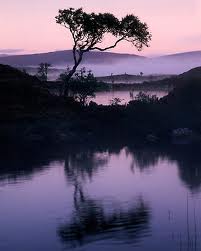
A reflected silhouette with the tree against a pink sky in the upper third of the frame and its reflection in the lower third to give a very good composition. Subtle colours and textures and a tonal range from jet black to almost white gives a first class image.

The island could have been taken on its own but for a very dramatic monochrome image the rock that dominates the foreground and most of the frame is a beautiful study of textures and tones.

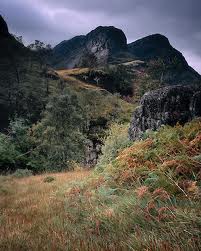
Another high quality image with subtle colours and textures and a good tonal range. The eye is drawn from the left foreground with very good fine detail down the valley to the break in the mountains and the bright sky. So this gives a strong composition and a single focal point of the sun.

Dramatic colours and a full tonal range make this a very powerful image. The waves breaking on the beach add to the textures and form lines which lead the eye into the picture and towards the single focal point of the bright sun.

There is a big difference between the smooth textures in the sky and the rocks and grass in the foreground that give this image depth. The horizon is just about on the upper third to give a strong composition.

The curve of the rocks in this image lead the eye into the frame and left towards the bright sun which is the focal point. If the sun had been placed on the upper right of the frame it would not have given such a strong composition. The rocks also give a good range of textures, tones and colours.

Another beautiful very detailed strong image, this time with bright colours in the foreground balanced by a silhouette and bright horizon in the background which gives the focal point. There is also a fantastic range of tones and textures.


208 T1 Built Environment - Eccleshall Church


27th September 2011

Holy Trinity Church Eccleshall

13th and 15th century architecture
  
Research and influences
This church is close to where I live so I knew that it was a very good example of 15th century architecture with a 13th century chancel but it is also listed in two reference books that I have: England's Thousand Best Churches by Simon Jenkins and Betjeman's Best British Churches updated by Richard Surman. 
I was influenced by the work of Lance Wittenberg, Richard Southall and Paul Thetford Professional Photographers whose work is shown elsewhere in this blog.

Assignment planning and choice of equipment
I have visited this church many times and know that the churchyard is large and the building is elevated from the road. I decided to take my longest telephoto lens to be able to take images of detailed parts of the building from a distance. A tripod was also taken on the assignment to be able to take sharp images on the long telephoto lens. 

Log of image capture, safe equipment operation and health and safety considerations
The general views of the church were taken with a 18 to 50 mm wide to short telephoto zoom lens on a tripod from the churchyard. As a tripod was used a wide aperture was possible with a low shutter speed. The close up images of some of the detailed carvings around the doorway were taken with a telephoto lens and a larger aperture to keep the shutter speed high. This was because it was not possible to use a tripod so close to the main door as there were workmen taking equipment in and out for a new sound system. A tripod in this situation would have been a problem from a health and safety point of view. It was not possible to take any photographs inside the church because of the work being undertaken.

Choice of final images selected 
The 5 images below were chosen from the 52 taken on the assignment to best convey the age and style of the building and show some of the detailed stone carvings.

View of the perpendicular tower with pinnacles.
Focal length 31 mm, set on manual exposure, ISO 100, 1/100 sec, f/11

View of the tower, nave and porch.
Focal length 20mm, set on manual exposure, ISO 100, 1/200 sec, f/13

Vaulted porch
Focal length 38 mm, set on manual exposure, ISO 100, 1/250 sec, f/8
 
 Gargoyle above the porch
 Focal length 149mm, set on manual exposure, ISO 100, 1/500 sec, f/6.3

Carving on the porch
Focal length 149 mm, set on manual exposure, ISO 100, 1/400 sec, f/6.3